Acosta-Belen, the author of this analyzation of the reading, focuses on a variation of studies about the Latin Americans. Acosta-Belen analyzes the variation of these Latin Americans and how much they make an impact on their own life and their life outside of what everyone else views. The stereotypes and the obstacles these Latin Americans were faced by made them who they are today. This reading consequently follows behind the idea of the "Cafe Bustelo" article previously read, which also described the various obstacles faced. The very first obstacle Latin Americans face is the stereotype which has been placed upon them about who they are as people and where they come from. From Americans viewing all Latin Americans as "Mexican", but they are all their own identity and their own person.
 |
| Figure 1: GIF depicting most stereotypes about Mexicans/Latinx people. |
Just like that, every single person has their own identity and their own personality. However, as Acosta-Belen describes, besides the stereotypes, and besides the financial trouble or the "weird stare downs" these citizens received, these Latin Americans were fighting for their own rights nonstop. They had to fight themselves an entire movement and how much they needed all this to work out, and how much they wanted their voice to be heard. At the end of the day, it was the matter of how much the person wanted everything to be focused on, and how much the movements were trying to shape them up and change them. However, at the end of the day, they were the same human beings as everyone else, but they had to fight harder to become realized, and as a person because of how much they had people's opinions faced upon them. The different perspectives faced upon these citizens made it harder for them. As Acosta-Belen explains a struggle of the women as he quotes, "But initially, Latinas and other women of color were largely excluded from the white middle-class women’s movement, and they had to carve out their own spaces in order to articulate their specific issues and experiences..." (Acosta-Belen 83). And just like how these women were not allowed to be looked at as the other women. And that is not a new thing, because the U.S. had gotten their own opinions and their own view upon all these movements. Just like how every American had to fight for something, Latin Americans were Americans as well who had to fight for everything because of their stereotypes and perspectives given by the people, and it surely was not easy for them.
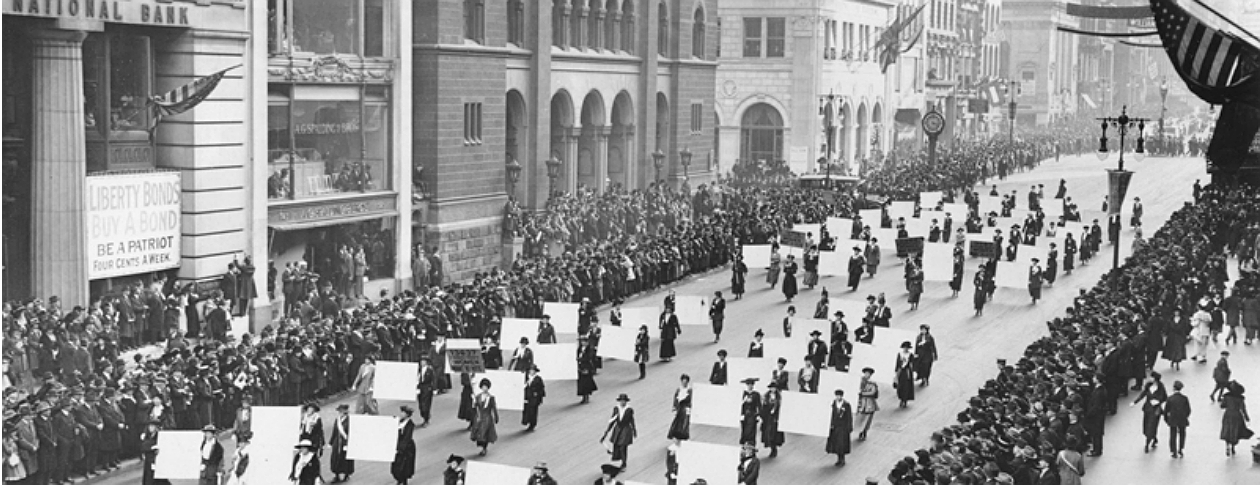 |
| Figure 1: The Women's Right's Movements in the U.S., just to depict how the Women Latin Americans fought. |
Amongst all this, the movements which were taking place, it is all the Latin Americans fighting for what they believed in and their voice. Because, at the end of the day, it is not the case of them being different people, because they are humans as well, who are as eligible and as qualified to show their talents. Such as being authors and having their own talents, just like every other American, they are Americans.
A Companion to Latina/O Studies, edited by Juan Flores, and Renato Rosaldo, John Wiley & Sons, Incorporated, 2007. ProQuest Ebook Central, https://ebookcentral.proquest.com/lib/rutgers-ebooks/detail.action?docID=320058.

Faiza,
ReplyDeleteTerrific post! You really got into the nitty-gritty of Acosta Belen's argument. Loved the images and gifs. Keep up the great work.
Professor Caroccio,
DeleteThank you, I appreciate it!